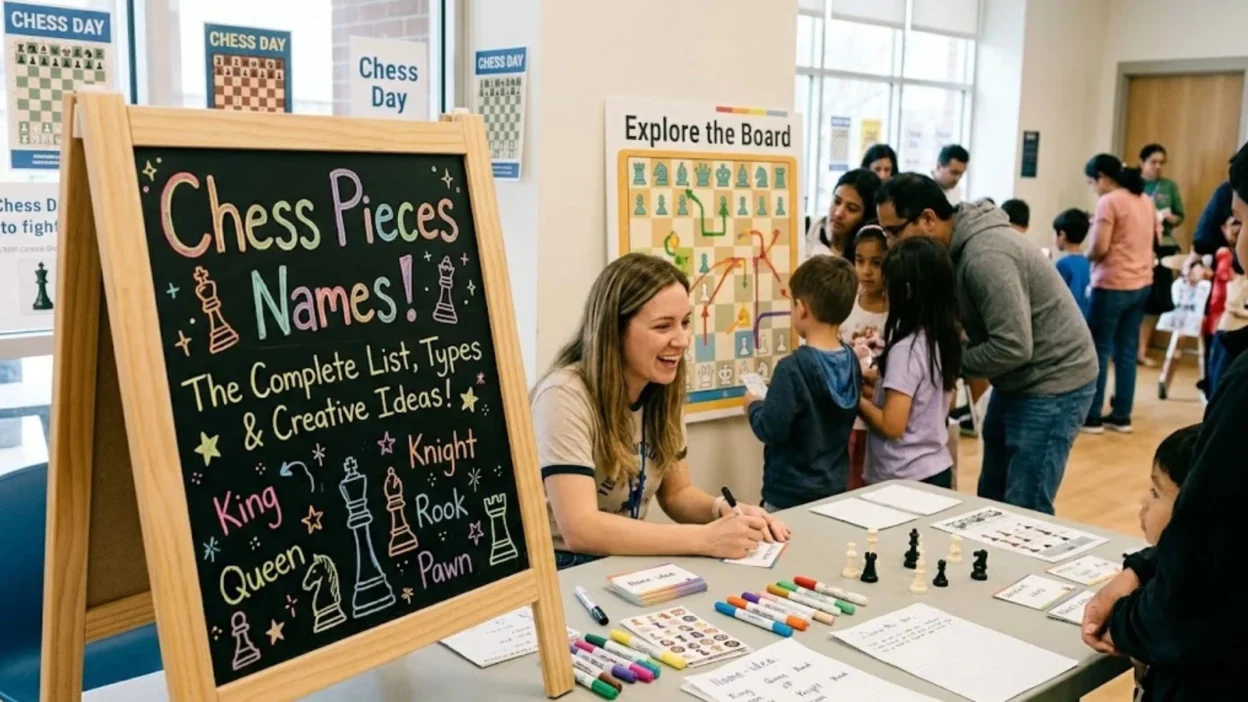
Chess is a classic game of strategy, patience, and smart decisions. However, if you are new to chess, you might find it confusing to remember all the different chess pieces names. Even experienced players sometimes look for creative ways to name their chess sets, organize their pieces, or learn more about their roles. Every piece has its own identity, movement, and importance on the board.
Choosing or understanding the right chess pieces names makes the game easier to enjoy. It also helps beginners recognize each piece quickly and understand how different pieces work together. Whether you are learning chess for the first time, teaching someone else, creating a chess-themed project, or simply exploring the game, knowing these names is a great starting point.
In this guide, you will discover the traditional names of all chess pieces, their meanings, alternative names, and creative naming ideas. We have also included unique, funny, cool, and stylish chess piece names for anyone who wants something different. From the powerful Queen to the humble Pawn, this collection will help you explore every piece and find names that match your chess style.
Traditional Chess Pieces Names
Every standard chess game uses six different types of pieces. Both players start with the same collection, making these traditional names essential for understanding the game.
- King
- Queen
- Rook
- Bishop
- Knight
- Pawn
White Chess Pieces Names
White pieces are traditionally used by the player who makes the first move. These are the six types of pieces found on the white side.
- White King
- White Queen
- White Rook
- White Bishop
- White Knight
- White Pawn
Black Chess Pieces Names
Black pieces belong to the second player. They have exactly the same movement abilities as their white counterparts.
- Black King
- Black Queen
- Black Rook
- Black Bishop
- Black Knight
- Black Pawn
Chess Pieces Names With Meanings
Understanding what each piece represents can make learning chess much more interesting. Here are the six traditional names with their basic meanings and roles.
- King – The most important piece in chess.
- Queen – The most powerful piece on the board.
- Rook – A castle-shaped piece that moves in straight lines.
- Bishop – A diagonal-moving piece.
- Knight – A horse-shaped piece that moves in an L-shape.
- Pawn – The smallest piece that moves forward.
Alternative Names for Chess Pieces
Some chess pieces have alternative names or historical associations. These terms can help you understand chess vocabulary across different cultures and traditions.
- King – Monarch
- Queen – Empress
- Rook – Castle
- Bishop – Cleric
- Knight – Horseman
- Pawn – Foot Soldier
- King – Sovereign
- Queen – Royal Lady
- Rook – Tower
- Knight – Cavalier
Unique Chess Pieces Names
Looking for something beyond the traditional names? These unique ideas are great for personalized chess sets, creative projects, and themed collections.
- Royal Guard
- Shadow King
- Golden Queen
- Iron Tower
- Mystic Knight
- Silver Bishop
- Crown Keeper
- Dark Rook
- Crystal Pawn
- Royal Spirit
- Storm King
- Moon Queen
- Brave Knight
- Ancient Tower
- Mystic Bishop
- Shadow Pawn
- Golden Guardian
- Royal Champion
- Ice Monarch
- Thunder Rook
Funny Chess Pieces Names
Chess can be serious, but that does not mean your chess set needs boring names. These funny ideas bring a little humor to every match.
- Checky
- Pawnzilla
- Sir Moves
- Queen Drama
- King Kong
- Horsey
- Castle Dude
- Bishop Bob
- Snack Pawn
- Lazy King
- Drama Queen
- Mr. Checkmate
- Tiny Trouble
- Sneaky Knight
- Rookzilla
- Captain Pawn
- Chess Nugget
- Sir Gallops
- Queen Bee
- Bossy Bishop
Cool Chess Pieces Names
Cool names can give your chess pieces a powerful personality. These ideas work especially well for custom chess sets, gaming profiles, and chess-themed content.
- Dark Knight
- Ice King
- Shadow Queen
- Thunder Rook
- Steel Bishop
- Night Rider
- Storm Breaker
- Black Phantom
- Fire Monarch
- Silent Guard
- Frost Knight
- Crimson King
- Ghost Tower
- Blade Runner
- Silver Storm
- Royal Fury
- Iron Shadow
- Midnight Queen
- Dragon Knight
- Thunder Lord
Stylish Chess Pieces Names
If you prefer elegant and sophisticated names, this collection offers plenty of inspiration. These names are suitable for luxury chess sets, decorative pieces, and personalized gifts.
- Royal Majesty
- Golden Crown
- Velvet Queen
- Noble King
- Imperial Knight
- Silver Monarch
- Crystal Castle
- Diamond Bishop
- Royal Essence
- Elegant Guard
- Golden Sovereign
- Noble Spirit
- Crown Jewel
- Imperial Queen
- Velvet Knight
- Majestic Tower
- Pearl Monarch
- Grand Royal
- Regal Shadow
- Royal Legacy
Powerful Chess Pieces Names
Some pieces naturally represent strength, control, and authority. These powerful names are inspired by warriors, leaders, and legendary characters.
- War King
- Battle Queen
- Titan Rook
- Warrior Knight
- Dragon King
- Iron Emperor
- Battle Lord
- Thunder Queen
- Steel Guardian
- Mighty Bishop
- Shadow Warrior
- Storm Emperor
- Royal Titan
- Dark Commander
- Fire Guardian
- Battle Master
- King Slayer
- Iron Champion
- War Monarch
- Supreme Knight
Cute Chess Pieces Names
Cute names are perfect for children’s chess sets, educational activities, and colorful chess collections. They make the game feel friendly and enjoyable.
- Tiny King
- Queenie
- Little Knight
- Mini Rook
- Baby Bishop
- Happy Pawn
- Coco King
- Sweet Queen
- Pony Knight
- Little Tower
- Sunny Bishop
- Tiny Guard
- Cherry Pawn
- Teddy King
- Bunny Knight
- Peach Queen
- Mini Monarch
- Cupcake Rook
- Happy Horse
- Snowy Pawn
Medieval Chess Pieces Names
Chess has a long connection with medieval themes, castles, royalty, and battlefield strategy. These names capture the atmosphere of an old kingdom.
- King Arthur
- Queen Eleanor
- Sir Galahad
- Lord Cedric
- Castle Guardian
- Royal Knight
- Duke Roland
- Lady Morgana
- Iron Cavalier
- Noble Archer
- Prince Edward
- Queen Isolde
- Lord Warwick
- Black Sentinel
- Royal Crusader
- Knight Commander
- Crown Defender
- Stone Fortress
- Silver Paladin
- Kingdom Guard
Fantasy Chess Pieces Names
Fantasy-inspired names are ideal for imaginative chess sets and players who enjoy dragons, magic, mythical kingdoms, and legendary characters.
- Dragon King
- Mystic Queen
- Shadow Wizard
- Crystal Knight
- Frost Dragon
- Magic Rook
- Phoenix Bishop
- Dark Sorcerer
- Moon Guardian
- Star Knight
- Flame Emperor
- Spirit Queen
- Rune Keeper
- Storm Wizard
- Mystic Pawn
- Dragon Rider
- Shadow Monarch
- Crystal Guardian
- Fire Phoenix
- Eternal King
Chess Pieces Names for Kids
Children often learn faster when chess pieces have simple and memorable names. These playful options can make chess lessons more exciting.
- King Buddy
- Queen Star
- Horse Hero
- Castle King
- Tiny Soldier
- Happy Knight
- Magic Queen
- Brave King
- Little Bishop
- Super Pawn
- Funny Horse
- Royal Buddy
- Smart Rook
- Mini Hero
- Chess Champ
- Captain King
- Princess Queen
- Speedy Knight
- Happy Castle
- Little Champion
Chess Pieces Names and Their Movements
Knowing the names is only the beginning of learning chess. Each piece follows specific movement rules, and understanding these rules helps you make better decisions during a match.
King
The King is the most important chess piece because protecting it is the main objective of the game.
- Moves one square in any direction.
- Can move horizontally, vertically, or diagonally.
- Cannot move into check.
- Can participate in a special move called castling.
Queen
The Queen is considered the strongest piece because of its excellent movement range.
- Moves horizontally.
- Moves vertically.
- Moves diagonally.
- Can travel multiple squares in any of these directions.
Rook
The Rook is a powerful piece that controls straight lines across the board.
- Moves horizontally.
- Moves vertically.
- Can travel multiple empty squares.
- Cannot move diagonally.
Bishop
The Bishop specializes in diagonal movement and stays on the same color squares throughout the game.
- Moves diagonally.
- Can travel multiple squares.
- Cannot jump over other pieces.
- Each player starts with two Bishops.
Knight
The Knight is different from other pieces because it can jump over other chess pieces.
- Moves in an L-shaped pattern.
- Travels two squares in one direction and one square sideways.
- Can jump over other pieces.
- Can land on either black or white squares.
Pawn
The Pawn is the smallest chess piece, but it can become extremely important during a match.
- Moves forward one square.
- Can move two squares on its first move.
- Captures diagonally.
- Can be promoted when it reaches the opposite end of the board.
- Can capture through a special move called en passant.
Chess Pieces Names and Their Values
Chess pieces have different approximate point values. These values help players understand exchanges and evaluate their positions during a game.
Chess Piece
Approximate Value
Pawn
1 point
Knight
3 points
Bishop
3 points
Rook
5 points
Queen
9 points
King
Priceless
The King does not have a normal point value because losing it means losing the game. These numbers are general guidelines rather than fixed rules, and a piece’s actual value can change depending on its position.
How to Choose the Perfect Chess Piece Name
Choosing the right name depends on your purpose and the personality you want to give your chess collection. A traditional chess set may look best with classic names, while a personalized collection can benefit from creative and imaginative ideas.
Start by considering the appearance of your pieces. A golden King might suit a royal name, while a dark Knight could have a mysterious identity. You can also choose names based on personality, such as powerful names for the Queen and funny names for the Pawns.
Keep your choices short and easy to remember. Simple names are especially useful when teaching children or organizing a themed chess collection. Another good idea is to follow one theme throughout your set, such as medieval characters, fantasy creatures, or famous warriors.
Most importantly, choose names that make your chess experience more enjoyable. There is no need to follow a complicated naming system when a simple and creative idea works perfectly.
Common Mistakes to Avoid When Naming Chess Pieces
Naming chess pieces can be fun, but a few mistakes can make your collection confusing. Avoid giving several pieces names that sound almost identical, especially when you are creating a set for children or beginners.
Another common mistake is mixing completely unrelated themes. For example, combining medieval knights with modern superhero names may make your collection feel inconsistent. You should also avoid unnecessarily long names that are difficult to remember or pronounce.
Do not confuse creative nicknames with official chess terminology. The traditional names remain King, Queen, Rook, Bishop, Knight, and Pawn. Alternative names can add personality, but they do not change the actual rules of chess.
Finally, remember that the King is not simply another powerful piece. Its importance is different because protecting it is essential to winning the game.
Interesting Facts About Chess Pieces
Chess pieces have fascinating histories, and their traditional designs have developed over many centuries. Learning a few interesting facts can make the game even more enjoyable.
- A standard chess set contains 32 pieces.
- Each player starts with 16 pieces.
- Every player has one King and one Queen.
- Both players begin with two Rooks, two Bishops, and two Knights.
- Each player starts with eight Pawns.
- The Queen can move in eight directions when the paths are clear.
- Knights are the only standard chess pieces that can jump over other pieces.
- Pawns can become Queens, Rooks, Bishops, or Knights through promotion.
- A King cannot be captured in standard chess; the game ends with checkmate.
- The original chess game developed from an earlier Indian game called Chaturanga.
Why Are Chess Pieces Different Shapes?
Traditional chess pieces have different shapes so players can recognize them quickly during a match. The King usually has a cross-shaped crown, while the Queen has a smaller crown. Rooks resemble castles, Bishops often feature a slit or pointed top, and Knights are designed like horses.
Pawns are generally the smallest pieces and have a simple rounded appearance. These recognizable designs make it easier to identify every piece without needing to read a label.
What Happens When a Pawn Reaches the Other Side?
When a Pawn reaches the opposite end of the board, it can be promoted to a Queen, Rook, Bishop, or Knight. Most players choose a Queen because it has the greatest movement ability.
However, choosing a Knight or another piece can sometimes create a better tactical opportunity. This special rule makes Pawns more valuable than their small size might suggest.
Frequently Asked Questions About Chess Pieces Names
Here are answers to common questions about chess piece names, their roles, and traditional terminology.
What Are the Six Chess Pieces Called?
The six chess pieces are King, Queen, Rook, Bishop, Knight, and Pawn. Every standard chess set uses these six types for both players.
How Many Pieces Are in a Chess Set?
A standard chess set contains 32 pieces in total. Each player starts with 16 pieces, including one King, one Queen, two Rooks, two Bishops, two Knights, and eight Pawns.
Which Is the Most Powerful Chess Piece?
The Queen is generally considered the most powerful piece because it can move horizontally, vertically, and diagonally across the board. However, the King is the most important piece.
Why Is the Horse Called a Knight in Chess?
The horse-shaped piece is traditionally called a Knight because it represents a mounted soldier or warrior. Its unique L-shaped movement also makes it different from every other piece.
What Is the Smallest Chess Piece Called?
The smallest chess piece is called a Pawn. Each player starts with eight Pawns, and they move forward while capturing diagonally.
Can Chess Pieces Have Different Names?
Yes, you can give chess pieces creative nicknames for personalized sets, games, or educational activities. However, their official names remain King, Queen, Rook, Bishop, Knight, and Pawn.
Conclusion
Learning chess pieces names is an important step toward understanding and enjoying the game. The six traditional pieces are King, Queen, Rook, Bishop, Knight, and Pawn, and each has its own movement, purpose, and importance. Knowing their names makes it easier to follow chess matches, teach beginners, and develop better playing skills.
If you are creating a personalized chess set, you can also explore unique, funny, cool, stylish, and fantasy-inspired names. Remember to keep your choices simple, memorable, and connected to your preferred theme. Whether you love traditional chess terminology or creative nicknames, the right names can make your collection more interesting. Keep practicing, explore different strategies, and enjoy every move on the board!

Freya Sterling is a passionate naming researcher and content writer who specializes in pet names, baby names, and creative naming ideas. She enjoys helping readers discover meaningful, unique, and memorable names through carefully researched and easy-to-read guides.