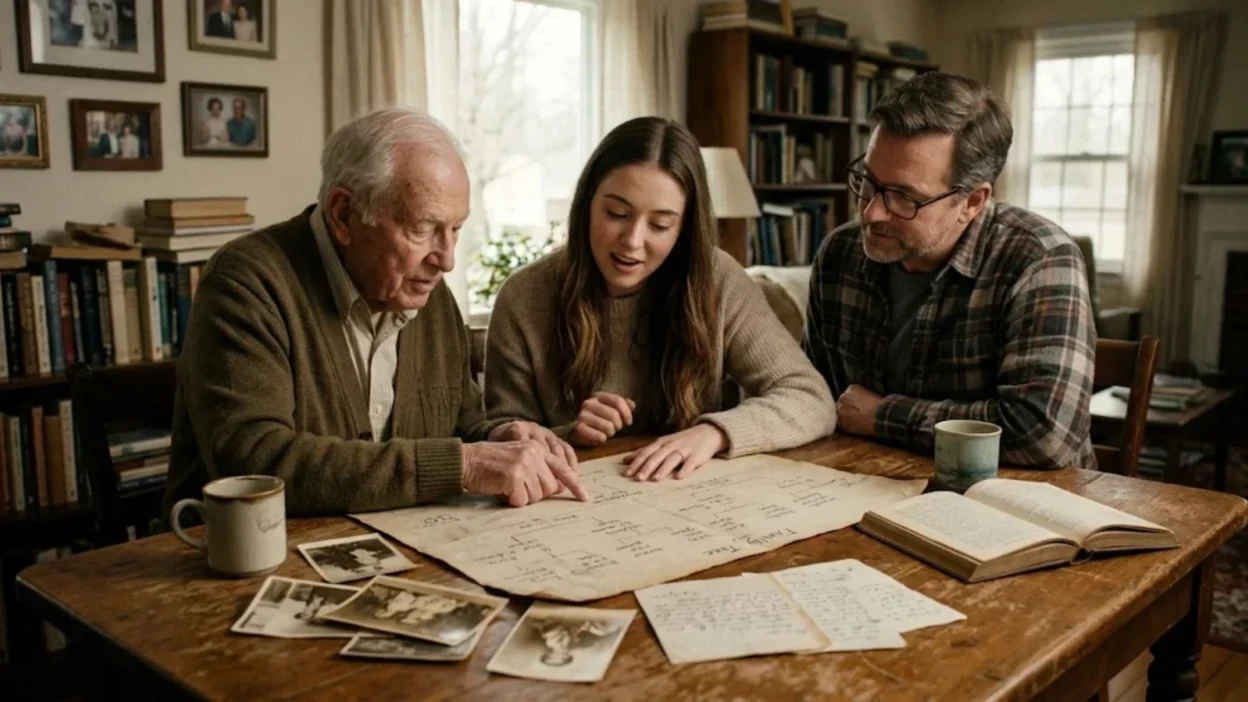
Have you ever wondered what your surname really means or where it came from? A surname is more than just a family name. It can tell an interesting story about your ancestors, cultural background, family traditions, and even the places where earlier generations lived. However, many people use their last names every day without knowing their actual meanings.
Understanding surname meaning can help you discover a deeper connection to your family history. Some surnames come from occupations, while others are connected to geographical locations, personal characteristics, or the names of ancestors. For example, names like Smith, Baker, and Taylor originally referred to particular professions.
A surname can also reveal cultural and historical influences that have been passed down through generations. Whether you are researching your family tree, learning about different naming traditions, or simply curious about your last name, understanding its background can be fascinating.
In this guide, we will explore the definition of a surname, its history, different types, popular examples, and meanings from various cultures. You will also discover how to research your own family name and understand the story behind it.
What Is the Surname Meaning?
A surname is a family name that usually comes after a person’s given name. It is commonly shared by family members and helps distinguish one family from another.
In simple words, surname meaning refers to the definition, origin, and historical background of a family name.
For example:
- John Smith – Smith is the surname.
- Emma Johnson – Johnson is the surname.
- David Brown – Brown is the surname.
- Olivia Wilson – Wilson is the surname.
Surnames are also called last names or family names in many English-speaking countries. However, their placement and use can differ across cultures.
Surname vs. First Name
First names and surnames have different purposes in personal identification.
- First name: The personal name given to someone at birth or during a naming ceremony.
- Surname: The family name that often connects a person to their relatives.
- Middle name: An additional personal name placed between the first name and surname.
For example, in the name James Michael Anderson:
- James is the first name.
- Michael is the middle name.
- Anderson is the surname.
Why Are Surnames Important?
Surnames help people identify family relationships and preserve family traditions. They also make official records, historical documents, and family research easier to organize.
Moreover, a surname can provide clues about:
- Family ancestry and heritage.
- Cultural and geographical origins.
- Traditional family occupations.
- Historical migration patterns.
- Relationships between generations.
History and Origin of Surnames
Surnames developed gradually as communities grew and people needed better ways to identify one another. A single first name was often enough in small villages, but larger populations made additional identification necessary.
Over time, family names became hereditary and were passed from parents to children.
Early Origins of Family Names
In ancient societies, people used different methods to distinguish individuals with similar first names. Some were identified through their fathers, professions, physical features, or hometowns.
For instance, someone named William who worked as a blacksmith might eventually become known by a name connected to that occupation.
Likewise, a person living near a river or hill could receive a surname associated with that location.
How Surnames Became Hereditary
During the Middle Ages, surnames gradually became more common in different parts of Europe. As populations increased, governments and communities needed more reliable identification systems.
Consequently, family names started passing from one generation to another.
In some regions, surnames became common earlier than in others. Their adoption depended on local traditions, administrative systems, and cultural practices.
Surnames Around the World
Different countries developed their own naming customs.
- England: Occupational, geographical, and patronymic surnames became common.
- Scotland: Clan connections influenced many family names.
- Ireland: Gaelic traditions shaped many surnames.
- China: Family names often appear before given names.
- Japan: Many surnames are connected to geographical features.
- Arab countries: Family names may reflect ancestry, tribal connections, or geographical origins.
- South Asia: Surnames can reflect family heritage, regional identity, occupations, or community traditions.
Main Types of Surnames
Not all family names have the same origins. Most surnames developed from a few common naming patterns.
Here are the main types that can help you understand where different family names came from.
Patronymic Surnames
These surnames are derived from a father’s or male ancestor’s personal name. They often indicate family relationships across generations.
Examples include:
- Johnson
- Jackson
- Wilson
- Anderson
- Peterson
- Harrison
- Thompson
- Robertson
- Davidson
- Richardson
Occupational Surnames
Occupational surnames developed from traditional jobs and professions. They often describe the work performed by an ancestor.
Examples include:
- Smith
- Baker
- Taylor
- Miller
- Cooper
- Carpenter
- Fisher
- Shepherd
- Turner
- Cook
Geographical Surnames
These family names are associated with particular places, landscapes, or geographical features. They may describe where an ancestor lived or originally came from.
Examples include:
- Hill
- Woods
- Rivers
- Brooks
- Fields
- Forest
- Dale
- Lake
- Underwood
- Middleton
Descriptive Surnames
Some surnames originated from personal characteristics, appearances, or distinguishing qualities.
Examples include:
- Brown
- White
- Black
- Short
- Strong
- Young
- Hardy
- Wise
- Little
- Armstrong
100 Popular Surnames Around the World
Family names can differ greatly between countries and cultures. However, some surnames have become widely recognized because of migration, population growth, and historical traditions.
Here is a collection of popular surnames from different parts of the world.
Popular English Surnames
These surnames have strong historical connections to English-speaking communities.
- Smith
- Johnson
- Williams
- Brown
- Jones
- Miller
- Davis
- Wilson
- Taylor
- Anderson
- Thomas
- Moore
- Martin
- Jackson
- Thompson
- White
- Harris
- Clark
- Lewis
- Walker
- Hall
- Allen
- Young
- King
- Wright
Popular European Surnames
European surnames often reflect local languages, occupations, family relationships, and geographical origins.
- Garcia
- Martinez
- Rodriguez
- Hernandez
- Lopez
- Gonzalez
- Perez
- Rossi
- Romano
- Ferrari
- Bianchi
- Muller
- Schmidt
- Schneider
- Fischer
- Weber
- Meyer
- Wagner
- Dubois
- Laurent
- Moreau
- Bernard
- Martin
- Lefevre
- Thomas
Popular Asian Surnames
Asian family names reflect a wide range of linguistic and cultural traditions.
- Wang
- Li
- Zhang
- Liu
- Chen
- Yang
- Huang
- Zhao
- Wu
- Zhou
- Kim
- Lee
- Park
- Choi
- Jung
- Tanaka
- Suzuki
- Sato
- Watanabe
- Nakamura
- Patel
- Shah
- Singh
- Khan
- Ahmed
Surname Meanings and Their Origins
Some family names have meanings connected to traditional occupations, physical features, or ancestral relationships. Learning these meanings can make surname research more interesting.
Below are some well-known examples with their commonly accepted origins.
Common Surnames With Meanings
- Smith: Metalworker or blacksmith.
- Baker: A person who baked bread.
- Taylor: Someone who made or repaired clothes.
- Miller: A person who operated a mill.
- Fisher: Someone who caught fish.
- Cooper: A maker of wooden barrels.
- Johnson: Son of John.
- Wilson: Son of William.
- Brown: Associated with the color brown.
- White: Associated with the color white.
- King: A ruler or royal title.
- Clark: A clerk or scholar.
- Hill: Someone associated with a hill.
- Brooks: Connected to a brook or stream.
- Young: Originally associated with youth.
- Walker: A traditional occupation involving cloth processing.
- Carter: A person who transported goods by cart.
- Cook: Someone who prepared food.
- Turner: Someone who worked with a lathe.
- Foster: A name with several historical occupational and personal origins.
Note: Surname meanings can vary depending on spelling, language, region, and family history. These are general historical interpretations rather than guaranteed meanings for every family.
Unique Surname Ideas
Unique surnames can add personality and distinction to fictional characters, creative projects, and storytelling.
If you are looking for uncommon family names, these options offer a variety of styles.
- Ashbourne
- Blackwood
- Everhart
- Whitmore
- Ravenscroft
- Thornfield
- Fairchild
- Winterbourne
- Hawthorne
- Sterling
- Kingsley
- Beaumont
- Waverly
- Lockwood
- Ashford
- Sinclair
- Ellington
- Westbrook
- Winslow
- Montgomery
Cool and Stylish Surnames
Some surnames have a modern, memorable, and sophisticated sound. They can work particularly well for fictional characters, online identities, and creative writing.
Here are some cool and stylish options worth exploring.
- Knight
- Phoenix
- Storm
- Steele
- Hunter
- Blake
- Cross
- Chase
- Frost
- Archer
- Wolfe
- Monroe
- Hayes
- Ryder
- Stone
- Maddox
- Griffin
- Knox
- Dawson
- Bennett
Rare and Uncommon Surnames
Rare surnames can be especially interesting because they may have unusual spellings or regional origins.
However, rarity depends on the country and population being considered.
- Quill
- Thorne
- Merriweather
- Nightingale
- Featherstone
- Pemberton
- Treadwell
- Fairweather
- Weatherford
- Hollingsworth
- Winspear
- Ainsworth
- Brackenridge
- Ravenshaw
- Templeton
Pakistani and South Asian Surnames
South Asian surnames often reflect family heritage, regional history, ancestral connections, and cultural traditions.
In Pakistan, people may use family names, tribal names, clan names, titles, or geographical identifiers. Naming practices also differ between regions and families.
Some commonly recognized Pakistani and South Asian surnames include:
- Khan
- Malik
- Chaudhry
- Sheikh
- Syed
- Shah
- Butt
- Abbasi
- Qureshi
- Hashmi
- Siddiqui
- Ansari
- Awan
- Jutt
- Arain
- Rajput
- Gill
- Bajwa
- Sandhu
- Warraich
What Do Pakistani Surnames Represent?
Many Pakistani family names have historical or cultural associations.
For example:
- Khan: A historical title used as a family name.
- Malik: Traditionally associated with ownership, leadership, or authority.
- Syed: A title associated with claimed descent from the Prophet Muhammad’s family.
- Qureshi: Associated with the Quraysh tribe.
- Abbasi: Associated with the Abbasid lineage.
- Ansari: Historically associated with the Ansar of Madinah.
- Sheikh: A title used in different cultural and family traditions.
- Awan: Associated with a prominent South Asian community.
These associations do not establish the ancestry of every individual carrying the surname.
How to Choose the Perfect Surname
Choosing a surname for a fictional character, family tree, brand identity, or creative project requires a little thought. The right name should feel natural and match the purpose behind it.
Start by considering the cultural background you want to represent. If you are creating a character from a particular country, research surnames that genuinely belong to that region. This makes the character feel more believable.
Next, think about pronunciation and spelling. A complicated surname may look interesting, but an easy-to-pronounce option is often more memorable.
You should also consider the meaning and history behind the name. Some surnames represent occupations, while others reflect geographical locations or family connections.
Finally, say the complete name aloud. A surname should flow naturally with the first and middle names. Take your time comparing different options before making your final choice.
Common Mistakes to Avoid When Researching Surnames
Researching family names can be exciting, but some common mistakes can lead to incorrect conclusions.
Keep these points in mind:
- Assuming every surname has one meaning: A single surname can have different origins.
- Ignoring spelling variations: Historical records may contain several versions of the same name.
- Trusting every online source: Some websites publish inaccurate surname explanations.
- Confusing popularity with origin: A common surname does not necessarily have one specific cultural background.
- Ignoring family records: Birth certificates, marriage documents, and historical records can provide valuable clues.
- Making assumptions about ancestry: A surname alone cannot prove someone’s ethnicity, nationality, or family lineage.
Always compare multiple sources when researching an unfamiliar family name.
How to Find the Meaning of Your Own Surname
Discovering the history of your family name can be a rewarding experience. You do not need to be a professional historian to start researching your surname.
Here are some practical ways to begin.
Search Your Surname Online
Start by searching your exact surname along with words such as origin, history, and meaning. Compare information from multiple reliable sources.
Ask Older Family Members
Parents, grandparents, and other relatives may know stories about your family’s earlier generations. Their memories can help you understand regional connections and spelling changes.
Check Historical Documents
Old birth records, marriage certificates, immigration documents, and family photographs may provide useful information about your ancestors.
Explore Genealogy Websites
Genealogy platforms can help you organize family relationships and locate historical records.
Some useful resources include:
- FamilySearch – Explore family history records.
- Ancestry – Research your family tree.
- Behind the Name – Explore name origins and meanings.
These resources can help you begin your research, although not every surname will have complete historical documentation.
Frequently Asked Questions About Surname Meaning
Here are answers to some common questions about surnames, their origins, and their importance.
What does surname mean?
A surname is a family name that usually comes after a person’s given name. It often connects individuals to their family history and relatives.
Is a surname the same as a last name?
Yes, surname and last name generally mean the same thing. Both refer to the family name used to identify a person’s family connection.
Why do people have surnames?
People developed surnames to distinguish individuals with similar first names. Over time, these names became hereditary and passed through generations.
How can I find the origin of my surname?
You can research your surname through genealogy websites, historical documents, family records, and conversations with older relatives.
Can two different families have the same surname?
Yes, many unrelated families share identical surnames. They may have developed independently in different locations or cultures.
Do surnames reveal family ancestry?
Surnames can provide useful clues about family history, language, and geographical origins. However, a surname alone cannot confirm someone’s complete ancestry.
Conclusion
Understanding surname meaning is a great way to explore family history, cultural traditions, and the stories behind different names. Surnames are much more than identification labels because they can preserve information about occupations, geographical locations, ancestors, and historical communities.
Throughout this guide, we explored the definition of surnames, their origins, different types, popular examples, and Pakistani family names. We also covered practical ways to research your own surname and avoid common mistakes.
Remember that every family name has its own story, and its meaning may change depending on its historical and cultural background. If you are curious about your surname, start researching it, ask your relatives, and explore historical records. You might discover something fascinating about your family’s past!

Freya Sterling is a passionate naming researcher and content writer who specializes in pet names, baby names, and creative naming ideas. She enjoys helping readers discover meaningful, unique, and memorable names through carefully researched and easy-to-read guides.