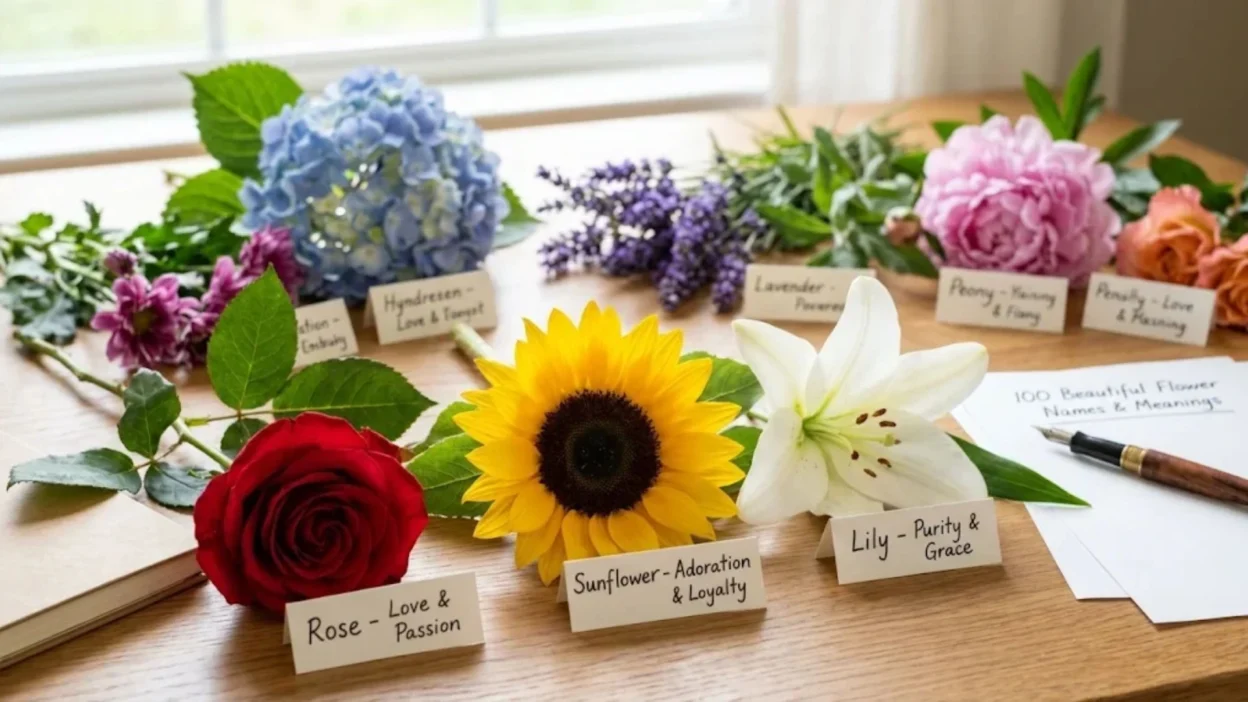
Flowers make the world more colorful, beautiful, and welcoming. However, remembering their names can sometimes be confusing, especially when you know a flower by its local name but want to learn what it is called in English. Whether you are a student, a gardening enthusiast, a parent helping a child with homework, or simply someone who loves nature, learning flowers name in English can be both enjoyable and useful.
Imagine walking through a beautiful garden and seeing roses, tulips, sunflowers, and lilies. You may recognize their appearance, but knowing their English names helps you describe them confidently. Similarly, learning flower names can improve your vocabulary, make school assignments easier, and help you communicate with people who share your interest in plants.
Choosing the right flower name also matters when you are preparing a school project, creating a garden, writing a greeting card, or looking for inspiration for a baby name. Every flower has its own appearance, personality, and traditional symbolism.
In this guide, you will discover more than 100 beautiful flower names in English, along with their common meanings, interesting categories, and useful learning tips. From popular garden flowers to unusual tropical blooms, this collection makes finding and remembering flower names simple.
100 Common Flowers Name in English
Learning common flower names is a great starting point for building your English vocabulary. Below is a carefully selected collection of beautiful flowers that you may recognize from gardens, parks, celebrations, and nature.
Complete List of Flower Names
- Rose
- Sunflower
- Tulip
- Lily
- Jasmine
- Daisy
- Marigold
- Orchid
- Lavender
- Hibiscus
- Daffodil
- Lotus
- Poppy
- Peony
- Carnation
- Chrysanthemum
- Magnolia
- Bluebell
- Iris
- Violet
- Petunia
- Zinnia
- Geranium
- Begonia
- Gardenia
- Camellia
- Dahlia
- Aster
- Snapdragon
- Pansy
- Hydrangea
- Anemone
- Freesia
- Primrose
- Foxglove
- Morning Glory
- Sweet Pea
- Periwinkle
- Buttercup
- Cosmos
- Forget-Me-Not
- Wisteria
- Azalea
- Rhododendron
- Ranunculus
- Snowdrop
- Heather
- Honeysuckle
- Calendula
- Yarrow
- Delphinium
- Gladiolus
- Verbena
- Salvia
- Coreopsis
- Coneflower
- Bleeding Heart
- Hellebore
- Larkspur
- Canterbury Bells
- Plumeria
- Bird of Paradise
- Passion Flower
- Tuberose
- Amaryllis
- Allium
- Cyclamen
- Fuchsia
- Nasturtium
- Phlox
- Sweet William
- Stock
- Lisianthus
- Scabiosa
- Statice
- Lupine
- Goldenrod
- Queen Anne’s Lace
- Torch Ginger
These names cover a wide range of flowers, including popular garden varieties, wildflowers, flowering shrubs, and tropical plants. Some are commonly used in bouquets, while others are especially popular in home gardens and landscaping.
Flower Names in English With Meanings
Flowers are often associated with emotions, relationships, celebrations, and special memories. Their traditional meanings can also help you understand why certain flowers are popular gifts.
Beautiful Flowers and Their Symbolic Meanings
Here are some well-known flowers and the feelings or ideas they commonly represent.
- Rose – Love and romance
- Sunflower – Happiness and positivity
- Lily – Purity and renewal
- Jasmine – Love and grace
- Daisy – Innocence and cheerfulness
- Tulip – Perfect love
- Lavender – Calmness and relaxation
- Marigold – Warmth and creativity
- Lotus – Peace and spiritual growth
- Orchid – Beauty and elegance
- Violet – Loyalty and modesty
- Peony – Prosperity and good fortune
- Carnation – Admiration and affection
- Daffodil – New beginnings and hope
- Poppy – Remembrance and peace
- Gardenia – Purity and secret love
- Iris – Wisdom and courage
- Forget-Me-Not – True remembrance
- Magnolia – Dignity and perseverance
- Bluebell – Gratitude and humility
- Camellia – Admiration and affection
- Freesia – Friendship and trust
- Chrysanthemum – Joy and longevity
- Hydrangea – Gratitude and understanding
- Primrose – Youth and new beginnings
Remember that flower symbolism can change depending on culture, tradition, and occasion. Therefore, these meanings are best understood as common associations rather than fixed definitions.
Different Types of Flower Names in English
Not every flower has the same appearance or personality. Some are colorful and cheerful, while others are delicate, unusual, or wonderfully fragrant. Exploring different categories makes it easier to discover flowers that match your interests.
Unique Flower Names
Looking for something different from familiar roses and daisies? These unusual flower names are excellent choices for exploring the wonderful variety found in nature.
- Bird of Paradise
- Bleeding Heart
- Passion Flower
- Crown Imperial
- Chocolate Cosmos
- Ghost Orchid
- Black Bat Flower
- Parrot Tulip
- Queen of the Night
- Blue Poppy
Beautiful and Popular Flower Names
Some flowers remain favorites because of their attractive colors, recognizable shapes, and popularity in bouquets and gardens. These are among the most familiar choices.
- Rose
- Peony
- Tulip
- Orchid
- Lily
- Hydrangea
- Dahlia
- Magnolia
- Camellia
- Ranunculus
Small and Delicate Flower Names
Small flowers can make gardens look charming and colorful. They are also excellent examples for children learning basic English vocabulary.
- Daisy
- Violet
- Bluebell
- Snowdrop
- Primrose
- Pansy
- Baby’s Breath
- Forget-Me-Not
- Periwinkle
- Buttercup
Fragrant Flower Names
Some flowers are especially loved for their pleasant fragrances. Their scents are often associated with gardens, perfumes, relaxation, and special occasions.
- Jasmine
- Lavender
- Gardenia
- Tuberose
- Honeysuckle
- Rose
- Freesia
- Lilac
- Hyacinth
- Sweet Pea
Colorful Flower Names
If you love bright gardens and beautiful floral arrangements, these flowers offer a wonderful variety of colors.
- Sunflower
- Marigold
- Zinnia
- Hibiscus
- Petunia
- Cosmos
- Gerbera
- Dahlia
- Poppy
- Chrysanthemum
Wildflower Names in English
Wildflowers grow naturally in different environments, including meadows, forests, fields, and open spaces. Many of them attract butterflies and other pollinators.
- Bluebell
- Buttercup
- Poppy
- Cornflower
- Yarrow
- Goldenrod
- Foxglove
- Clover
- Queen Anne’s Lace
- Heather
Flower Names by Color
Flower colors are one of the easiest ways to recognize different varieties. In addition, knowing their colors can make it simpler to describe flowers in everyday English.
Red Flower Names
Red flowers are often associated with romance, passion, and strong emotions. They are especially popular for celebrations and decorative arrangements.
- Red Rose
- Poppy
- Red Tulip
- Amaryllis
- Hibiscus
- Carnation
- Dahlia
- Gerbera
White Flower Names
White flowers are commonly chosen for their soft appearance and elegant beauty. They are also frequently used in weddings and formal decorations.
- White Lily
- Jasmine
- Gardenia
- Snowdrop
- White Rose
- Magnolia
- Baby’s Breath
- White Orchid
Yellow Flower Names
Yellow flowers bring a cheerful feeling to gardens and floral arrangements. Their bright shades are often associated with friendship, sunshine, and happiness.
- Sunflower
- Daffodil
- Marigold
- Buttercup
- Yellow Tulip
- Coreopsis
- Goldenrod
- Yellow Chrysanthemum
Pink Flower Names
Pink flowers are popular for their delicate appearance and romantic charm. They are commonly used for gifts, celebrations, and garden decoration.
- Pink Rose
- Peony
- Cherry Blossom
- Pink Tulip
- Camellia
- Azalea
- Pink Carnation
- Pink Dahlia
Purple Flower Names
Purple flowers can give a garden a rich and elegant appearance. Many varieties are also appreciated for their fragrance and attractive shapes.
- Lavender
- Violet
- Iris
- Wisteria
- Lilac
- Purple Orchid
- Verbena
- Aster
Flower Names for Different Seasons
Different flowers bloom at different times of the year. Although flowering seasons vary by climate and location, understanding seasonal flowers can help you choose suitable plants for your garden.
Spring Flower Names
Spring is a wonderful season for colorful blooms. Many flowers appear during this time as temperatures become warmer and gardens begin to grow again.
- Tulip
- Daffodil
- Crocus
- Hyacinth
- Snowdrop
- Primrose
- Bluebell
- Cherry Blossom
Summer Flower Names
Summer gardens are often filled with bright colors and attractive blooms. Many summer flowers also attract bees, butterflies, and other helpful pollinators.
- Sunflower
- Zinnia
- Marigold
- Cosmos
- Petunia
- Hibiscus
- Dahlia
- Morning Glory
Autumn Flower Names
Autumn flowers add beautiful colors to gardens as the weather begins to cool. Several varieties are especially appreciated for their late-season blooms.
- Chrysanthemum
- Aster
- Goldenrod
- Sedum
- Japanese Anemone
- Helenium
- Heather
- Calendula
Winter Flower Names
Some flowers can bloom during colder months, depending on the climate and growing conditions. These varieties are useful for adding color when many other plants are dormant.
- Snowdrop
- Hellebore
- Winter Jasmine
- Cyclamen
- Winter Aconite
- Camellia
- Pansy
- Witch Hazel
How to Choose the Perfect Flower Name
Finding the right flower name becomes easier when you understand why you need it. For example, a student preparing a school assignment may prefer simple names such as Rose, Lily, Daisy, and Sunflower. However, someone creating a garden might be more interested in flowers that suit their local climate and available space.
Start by considering the flower’s appearance. Bright flowers such as Sunflowers and Marigolds are easy to recognize, whereas delicate varieties like Bluebells and Forget-Me-Nots have a softer look.
Next, think about fragrance and growing conditions. If you enjoy pleasant scents, Jasmine, Lavender, and Gardenia are worth exploring. Similarly, check whether a particular flower needs full sunlight, partial shade, or regular watering before planting it.
You should also consider the occasion. Roses and Tulips are popular gifts, while Daffodils and Snowdrops are often associated with the arrival of spring.
Finally, choose names that are easy to pronounce and remember if your main purpose is learning English. Practicing a few names every day can make your vocabulary stronger over time.
Common Mistakes to Avoid When Learning Flower Names
Learning flower names in English is simple, but a few common mistakes can make the process confusing. Paying attention to these details will help you recognize and remember flowers more accurately.
- Confusing similar-looking flowers: Some flowers have similar shapes or colors. For example, different varieties of daisies and chrysanthemums can look alike.
- Learning names without pictures: Reading names alone may not help you recognize flowers in real life. Try matching each name with an image.
- Ignoring pronunciation: A flower’s spelling and pronunciation are not always obvious. Listen to the correct pronunciation when learning unfamiliar names.
- Mixing common and scientific names: Rose is a familiar common name, while Rosa is its botanical genus. They are related but not interchangeable in every context.
- Assuming every flower grows everywhere: Climate, sunlight, soil, and water requirements affect where different flowers can grow.
- Memorizing too many names at once: Learning a smaller group of flowers regularly is usually easier than trying to remember a very long list in one sitting.
Extra Value: Interesting Facts About Flower Names
Flowers are more than beautiful decorations. They also play important roles in nature, culture, gardening, and everyday communication. Understanding a few interesting facts can make learning flower names even more enjoyable.
Flowers Have Different Botanical Structures
Not every plant that looks like a flower has the same botanical structure. For example, what people commonly call a sunflower is actually a flower head made up of many tiny individual flowers.
Some Flower Names Come From Their Appearance
Several flowers have names inspired by their shapes or visual features. Bird of Paradise, for instance, is named because its unusual flower resembles a colorful tropical bird.
Flowers Attract Important Pollinators
Bees, butterflies, and other insects visit flowers to collect nectar and pollen. During this process, they help many plants reproduce through pollination.
Some Flowers Are Used in Food
Certain flowers are edible and appear in different cuisines. Nasturtium, for example, is used in salads, while calendula petals can be used as a colorful garnish. However, never eat a flower unless you have confirmed that the species is edible and has been grown without unsafe chemicals.
Flower Names Improve Everyday English
Learning flower vocabulary helps you describe gardens, nature, gifts, and special occasions. It can also make conversations more interesting because you will have more words to explain what you see around you.
How to Learn Flower Names in English Easily
If you want to remember flower names for a long time, try making learning part of your daily routine. You do not need complicated study methods or expensive resources.
Use Pictures and Flashcards
Start with pictures of familiar flowers. Write the English name underneath each image and review the cards regularly. This method helps connect the written word with the actual appearance of the flower.
Group Flowers by Color
Instead of memorizing random names, organize them into color groups. For example, learn Red Rose, Yellow Sunflower, White Lily, and Purple Violet together.
Practice Pronunciation
Say each name aloud several times. You can also listen to English pronunciation recordings to understand how unfamiliar words sound.
Explore Real Gardens
Whenever you visit a garden, park, or flower shop, try identifying the flowers around you. This practical activity makes learning more enjoyable and helps you remember names naturally.
Write Simple English Sentences
Use new flower names in short sentences to improve your vocabulary.
- The rose is red.
- The sunflower is yellow.
- Jasmine has a lovely fragrance.
- Tulips grow in many beautiful colors.
- Lavender is popular for its pleasant scent.
With regular practice, you can gradually learn dozens of flower names without feeling overwhelmed.
Frequently Asked Questions About Flowers Name in English
Here are answers to some common questions about flower names, meanings, and English vocabulary.
What Are the 10 Most Common Flower Names in English?
Some of the most familiar flower names are Rose, Sunflower, Tulip, Lily, Daisy, Jasmine, Marigold, Orchid, Lavender, and Hibiscus. These flowers are popular in gardens, bouquets, and everyday conversations.
What Is the English Name of a Gulab?
The English name of Gulab is Rose. Roses are famous for their attractive petals, pleasant varieties of fragrance, and association with love and romance.
What Is the English Name of a Chameli?
The English name of Chameli is Jasmine. It is a fragrant flowering plant that is popular in gardens, perfumes, and traditional celebrations.
Which Flowers Are Best for Beginners to Learn?
Rose, Sunflower, Daisy, Tulip, Lily, and Marigold are excellent choices for beginners. Their names are relatively familiar, and their distinctive appearances make them easier to recognize.
What Are Some Beautiful Flower Names With Meanings?
Rose represents love, Sunflower represents happiness, Lily represents purity, and Lavender represents calmness. However, these symbolic meanings can vary across different cultures and traditions.
How Many Different Flower Names Are There in English?
There are thousands of common flower names in English because the language includes flowers from many regions and plant families. The exact number depends on whether you count varieties, hybrids, and regional common names separately.
Conclusion
Learning flowers name in English is a wonderful way to improve your vocabulary while exploring the beauty of nature. From popular choices like Roses, Sunflowers, and Tulips to unusual varieties such as Bird of Paradise and Bleeding Heart, there are countless flower names worth discovering.
This guide has covered more than 100 flower names, their traditional meanings, different color categories, seasonal varieties, and helpful learning tips. Whether you need these names for schoolwork, gardening, general knowledge, or everyday English practice, you now have a useful collection to get started.
Remember, you do not need to memorize every name immediately. Begin with a few familiar flowers, learn their appearances and pronunciations, and gradually explore new varieties. Keep practicing, stay curious, and enjoy discovering the colorful world of flowers!

Freya Sterling is a passionate naming researcher and content writer who specializes in pet names, baby names, and creative naming ideas. She enjoys helping readers discover meaningful, unique, and memorable names through carefully researched and easy-to-read guides.