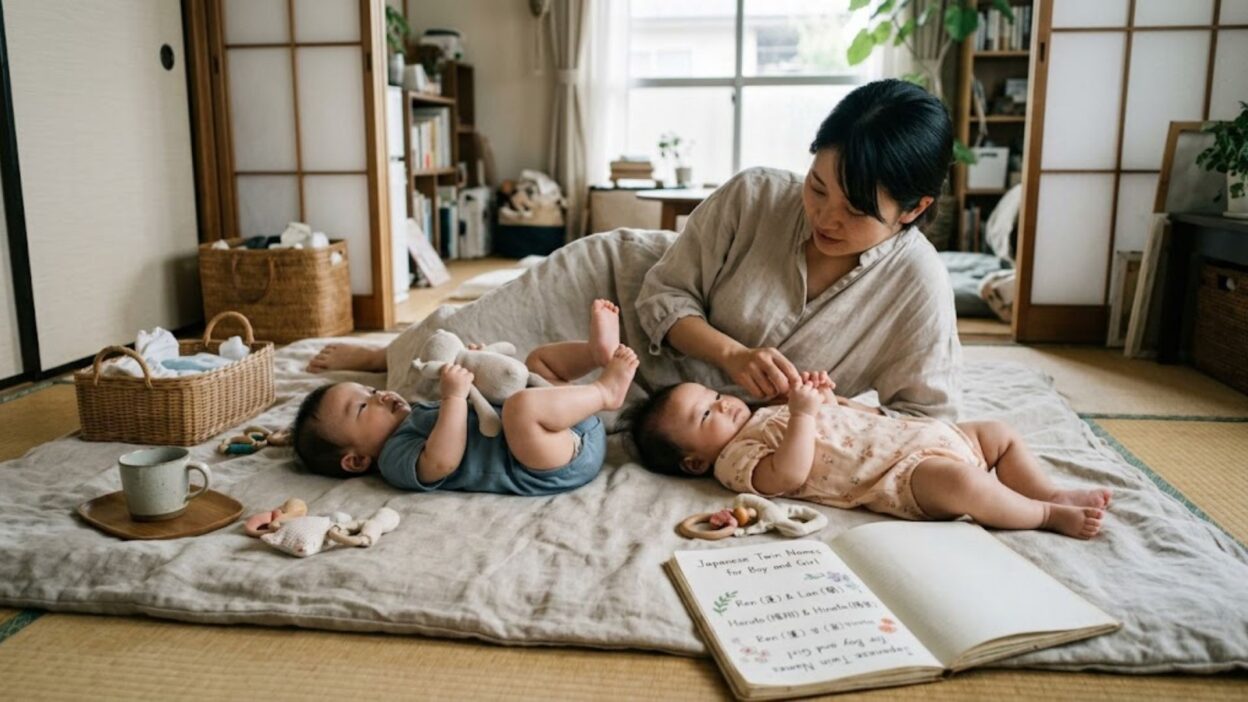
Choosing names for twins can be exciting, but finding two names that sound beautiful together is not always easy. When you are searching for Japanese twin names for a boy and girl, you may want something meaningful, stylish, and connected without making the names sound too similar.
Japanese names are especially appealing because they often reflect nature, seasons, light, strength, beauty, and hope. Some parents love traditional names, while others prefer modern Japanese names that feel fresh and memorable. For twins, matching the sounds or themes of two names can create a lovely connection between siblings.
The good news is that you do not have to choose names with identical endings to make them a perfect pair. You can select a strong boy’s name and a graceful girl’s name, or find two names inspired by the same natural element. However, remember that Japanese name meanings depend on the kanji characters used, so a name’s meaning may change with its spelling.
In this guide, you will discover more than 100 Japanese twin names for a boy and a girl, including cute, unique, traditional, cool, and modern combinations. You will also find selected name meanings, practical naming tips, common mistakes to avoid, and answers to frequently asked questions. Whether you are naming newborn twins, fictional characters, or characters in a story, these ideas will help you find a pair that feels just right.
Japanese Twin Names for Boy and Girl
These matching pairs combine appealing sounds, complementary styles, and Japanese-inspired naming ideas. Browse the list to find a combination that suits your twins’ personalities and your family’s preferences.
Beautiful Japanese Twin Name Pairs
- Haruto and Hina
- Ren and Rin
- Akira and Aiko
- Sora and Sakura
- Yuki and Yuna
- Haruki and Haruna
- Kaito and Kaori
- Riku and Rina
- Aoi and Akari
- Hinata and Hikari
- Itsuki and Ichika
- Nao and Nana
- Takumi and Tomomi
- Kenta and Keiko
- Daiki and Ayaka
- Minato and Misaki
- Kōki and Koharu
- Ryota and Riko
- Shota and Shiori
- Yuto and Yui
Matching Japanese Twin Names With Similar Sounds
- Hiro and Hina
- Kenji and Keiko
- Ryo and Rei
- Taiga and Tsubaki
- Kaito and Kanna
- Haru and Hana
- Sota and Saki
- Yuma and Yume
- Toma and Tomo
- Akito and Akane
- Naoki and Natsuki
- Kazuki and Kazumi
- Masato and Mai
- Shin and Shina
- Takeru and Takara
- Kiyoshi and Kiyomi
- Issei and Izumi
- Hayato and Himari
- Yoshi and Yoko
- Jun and Junko
Japanese Twin Names Inspired by Nature
- Sora and Hoshi
- Haru and Natsu
- Kai and Umi
- Ren and Sumire
- Itsuki and Momiji
- Asahi and Akari
- Riku and Minami
- Hinata and Himawari
- Kaito and Shizuku
- Aki and Ayame
- Tsubasa and Tsubaki
- Hayate and Kaede
- Ryusei and Koyuki
- Arashi and Nagisa
- Isamu and Sakura
Modern Japanese Twin Names for Boy and Girl
- Reo and Rio
- Rui and Runa
- Eita and Ena
- Kira and Kirari
- Yuito and Yuna
- Noa and Nao
- Iori and Ibuki
- Koki and Koko
- Seiji and Seina
- Aoto and Airi
- Rento and Rena
- Itsuki and Ito
- Kanata and Kanon
- Subaru and Sumire
- Towa and Touka
Japanese Twin Names With Meanings
A meaningful name can make a twin pairing feel even more special. The following examples include commonly used interpretations, although the exact meaning of a Japanese name depends on its kanji spelling.
Boy and Girl Twin Names With Beautiful Meanings
- Haruto and Hina — sunlight or spring-inspired interpretations, depending on kanji
- Ren and Sakura — lotus; cherry blossom
- Akira and Akari — bright or clear; light
- Hikari and Hikaru — light; radiance
- Sora and Hoshi — sky; star
- Yuki and Koyuki — happiness or snow-related meanings, depending on kanji
- Haruki and Haruna — spring or brightness-related interpretations
- Asahi and Hinata — morning sun; sunny place
- Aoi and Ayame — hollyhock or blue-related interpretations; iris
- Kaede and Momiji — maple; autumn maple foliage
- Kai and Umi — ocean-related meanings, depending on kanji
- Natsuki and Koharu — summer-related interpretations; little spring
- Riku and Minami — land; south
- Tsubasa and Tsubaki — wings; camellia
- Himari and Himawari — sunshine-related interpretations; sunflower
Short Japanese Twin Names With Meaningful Themes
- Rei and Ren — elegance or spirit-related meanings; lotus
- Yui and Yuto — connection or gentleness-related meanings
- Aiko and Akito — love child or beloved child; bright person, depending on kanji
- Rina and Riku — jasmine-related interpretations; land
- Hana and Haru — flower; spring
- Saki and Sota — blossom or hope-related interpretations; broad or expansive, depending on kanji
- Airi and Aoto — love and jasmine-related interpretations; blue or green-related interpretations
- Kiyomi and Kiyoshi — pure beauty; pure or righteous
- Kaori and Kaito — fragrance; ocean-related interpretations
- Izumi and Issei — spring or fountain; one or first, depending on kanji
Helpful tip: Always verify the kanji and intended meaning before making a final choice. A Japanese name written in hiragana, katakana, or different kanji can carry a different meaning.
Cute Japanese Twin Names for Boy and Girl
Cute names often have gentle sounds, short syllables, and an easy rhythm. These pairs work well if you want names that feel affectionate during childhood while remaining suitable as the twins grow older.
- Haru and Hana
- Ren and Rin
- Yuki and Yuna
- Sora and Saki
- Riku and Rina
- Yuto and Yui
- Kaito and Kanna
- Nao and Nana
- Rui and Runa
- Aki and Aiko
- Hiro and Hina
- Reo and Rio
- Yuma and Yume
- Eita and Ena
- Toma and Tomo
Unique Japanese Twin Names for Boy and Girl
If you prefer less predictable combinations, consider names with contrasting sounds or distinctive nature-inspired themes. These selections can also suit fictional twins in anime-inspired stories, novels, and role-playing games.
- Ryusei and Shizuku
- Kanata and Kanon
- Itsuki and Ichika
- Subaru and Sumire
- Hayate and Kaede
- Arashi and Nagisa
- Towa and Touka
- Iori and Ibuki
- Takara and Takeru
- Minato and Misaki
- Akito and Akane
- Naoki and Natsuki
- Taiga and Tsubaki
- Seiji and Seina
- Rento and Rena
Cool Japanese Twin Names for Boy and Girl
Cool names can sound confident, modern, and memorable without being difficult to pronounce. These combinations offer a balance between strong-sounding boy names and elegant or energetic girl names.
- Kaito and Airi
- Taiga and Riko
- Ren and Rei
- Ryo and Rio
- Hayato and Himari
- Daiki and Ayaka
- Takeru and Takara
- Haruki and Hikari
- Subaru and Sakura
- Minato and Aoi
- Ryota and Runa
- Kazuki and Kaori
- Koki and Koharu
- Yuito and Yuna
- Eita and Ichika
Traditional Japanese Twin Names for Boy and Girl
Traditional-style names may appeal to families who value established Japanese naming patterns. These choices draw from familiar names and styles, although the popularity and traditional associations of individual names can vary by generation.
- Kenji and Keiko
- Kiyoshi and Kiyomi
- Masato and Mai
- Jun and Junko
- Takumi and Tomomi
- Kenta and Yoko
- Naoki and Akane
- Hiroshi and Haruko
- Taro and Hanako
- Yoshio and Yoshiko
- Kazuo and Kazumi
- Shigeru and Sachiko
- Makoto and Miyuki
- Isamu and Emiko
- Tadashi and Chie
Stylish Japanese Twin Names for Boy and Girl
Stylish names often have a clean rhythm and a contemporary feel. These pairings combine short names, vowel patterns, and complementary sounds for families looking for something elegant without being overly complicated.
- Reo and Rena
- Rui and Rei
- Aoto and Airi
- Koki and Koko
- Noa and Nao
- Rento and Riko
- Sota and Saki
- Yuito and Yui
- Haruto and Haruna
- Akira and Akari
- Kanata and Kanon
- Itsuki and Ito
- Kaito and Kaori
- Towa and Touka
- Seiji and Seina
Japanese Twin Names Inspired by the Same Theme
Choosing a shared theme is an easy way to connect two names without making them sound almost identical. Nature, seasons, light, and flowers provide several attractive options.
Sun and Light Names
These pairs evoke brightness, warmth, and positive beginnings.
- Asahi and Akari
- Hikaru and Hikari
- Haruto and Hinata
- Akira and Aiko
- Kōki and Koharu
Flower and Plant Names
Flower-inspired names can create a gentle connection between twins, especially when one name sounds stronger and the other softer.
- Ren and Sakura
- Itsuki and Tsubaki
- Haruki and Sumire
- Kaede and Ayame
- Momiji and Ichika
Sky, Water, and Ocean Names
Choose these combinations if you love open skies, peaceful water, or the beauty of the natural world.
- Sora and Umi
- Kai and Minami
- Ryusei and Hoshi
- Kaito and Nagisa
- Riku and Shizuku
Spring and Seasonal Names
Seasonal names can represent a special time of year, a birthday season, or a fresh start.
- Haru and Natsu
- Haruki and Koharu
- Aki and Fuyumi
- Natsuki and Akira
- Yuki and Haruna
How to Choose the Perfect Japanese Twin Names
Finding the right combination takes more than selecting two names that sound cute together. Consider their pronunciation, meanings, cultural background, and how they will fit your family.
Choose Names That Complement Each Other
First, decide whether you prefer matching sounds or different names with a shared theme. Ren and Rin have a similar rhythm, while Haruto and Sakura feel more distinct. Both approaches can work beautifully.
Check the Japanese Meaning and Kanji
Japanese names can have several meanings depending on the kanji used. Therefore, do not rely on an online list alone. Ask a knowledgeable Japanese speaker or consult a reliable Japanese naming reference to verify the characters and intended interpretation.
Say Both Names Aloud
Read the names together with your surname. Check whether they are easy to pronounce, whether the sounds flow naturally, and whether each child can have an individual identity.
Think Beyond Childhood
A playful name may seem perfect for a baby, but it should also suit a teenager and an adult. Choose names that feel comfortable in family settings, schools, and professional situations.
Consider Your Family’s Language
If your family speaks Urdu, English, or another language alongside Japanese, test both names in those languages. Look for unintended meanings, difficult pronunciations, or sounds that may cause confusion.
Give Each Twin an Individual Identity
Matching names are lovely, but the twins do not need to share the same first syllable or ending. Two names with independent meanings and distinct sounds can still feel connected.
Common Mistakes to Avoid When Choosing Japanese Twin Names
It is easy to focus on how a pair looks on paper and overlook important details. A little research can help you avoid choosing names that feel awkward or have meanings you did not intend.
Choosing Names Only Because They Rhyme
Names such as Ren and Rin sound adorable together, but too much similarity can cause confusion. Consider whether family members will easily distinguish between the two names when calling the twins.
Assuming Every Name Has One Fixed Meaning
A name’s meaning may change with its kanji. Avoid presenting a single English translation as universally correct unless the specific spelling and characters support it.
Mixing Names Without Checking Their Origins
Some names are used across multiple cultures, while others have a more distinctly Japanese background. If cultural authenticity matters to you, research each name instead of assuming that every Japanese-sounding combination is traditionally Japanese.
Ignoring Pronunciation
A beautiful name may become frustrating if people repeatedly struggle to pronounce it. Practice saying both names aloud and consider how relatives, teachers, and friends will use them.
Choosing Names That Feel Too Similar
Shared initials or matching endings can create a connection, but identical-sounding names may make each twin’s identity less distinct. Aim for harmony rather than perfect duplication.
Forgetting to Check the Full Name
Always say each first name with the family surname. Check the complete sound, spelling, and possible unintended meanings before making your final decision.
Extra Tips for Naming Boy-Girl Twins
If you are still deciding between several combinations, use a simple shortlist rather than trying to compare every name at once. Write down your five favorite pairs and evaluate them using the same criteria.
Create a Shortlist of Your Favorite Pairs
- Choose five pairs that immediately appeal to you.
- Check the meaning and spelling of each name.
- Say every pair aloud with your surname.
- Ask a Japanese speaker to review the intended meanings.
- Remove combinations that feel difficult to pronounce or too similar.
- Keep the pair that feels natural to your family.
Decide How Closely the Names Should Match
Some parents prefer identical initials, while others want each child to have a completely independent name. Neither approach is necessary for a good pairing.
For example, Ren and Rin have a close sound connection, while Haruto and Aoi are more distinct. Meanwhile, Sora and Hoshi share a celestial theme. Decide which type of connection feels most meaningful to you.
Keep Cultural Authenticity in Mind
If the twins are Japanese or your family has a connection to Japanese culture, consult relatives or a knowledgeable Japanese speaker when possible. They can help you assess natural usage, kanji choices, and cultural associations.
For fictional characters, you have more creative freedom. Even then, checking the meanings and pronunciations can make the characters feel more thoughtfully developed.
Frequently Asked Questions
These answers cover common questions about Japanese twin names for a boy and a girl, including matching styles, meanings, and cultural considerations.
What are the best Japanese twin names for a boy and girl?
Haruto and Hina, Ren and Rin, Haruki and Haruna, and Kaito and Kaori are appealing options. The best pair depends on your preferred sound, meaning, and naming style.
What Japanese names go well together for boy-girl twins?
Names inspired by the same theme often work well together. For example, Sora and Hoshi share a sky-inspired connection, while Ren and Sakura offer a plant-inspired pairing.
What are some cute Japanese twin names?
Haru and Hana, Yuki and Yuna, Riku and Rina, and Yuto and Yui are cute combinations. Their short sounds make them easy to remember and say together.
Do Japanese twin names need to rhyme?
No, Japanese twin names do not need to rhyme or share the same first syllable. You can choose different names connected through nature, meaning, family tradition, or personal significance.
How do I check the meaning of a Japanese name?
Check the exact kanji characters used for the name and consult a reliable Japanese naming reference. A fluent Japanese speaker can also help verify the meaning, reading, and natural usage.
Can I use Japanese twin names for fictional characters?
Yes. Japanese names can be suitable for novels, anime-inspired stories, games, and other fictional characters. Research their meanings and cultural associations to make your choices more authentic.
Conclusion
Choosing Japanese twin names for a boy and girl becomes easier when you focus on sound, meaning, and the connection you want the names to share. Whether you love cute pairs such as Haru and Hana, stylish combinations such as Reo and Rena, or nature-inspired names such as Sora and Hoshi, there are many ways to find two names that complement each other.
Remember that matching names do not have to rhyme. The best pair gives each child an individual identity while creating a meaningful connection between the twins. Before making your final decision, verify the Japanese spelling, kanji, pronunciation, and intended meaning. This extra step can help you avoid common naming mistakes and choose a combination you will appreciate for years to come.
Take your time, shortlist your favorite combinations, and say each pair aloud with your family surname. Most importantly, choose names that feel special to you and suit both children as they grow. A thoughtful pairing can become a beautiful part of your family’s story.

Freya Sterling is a passionate naming researcher and content writer who specializes in pet names, baby names, and creative naming ideas. She enjoys helping readers discover meaningful, unique, and memorable names through carefully researched and easy-to-read guides.